How to Start a Blog (That Makes Money): Easy Guide to Blogging for Beginners
Wondering how to start a blog that makes money, but don’t know where to begin? This easy guide to blogging for beginners will show you how to create a blog, grow traffic with search engines, and turn your blog posts into blogging income!
Spend five minutes online and you’ll notice something fast: the digital marketing space has become overwhelmingly crowded.
You’ll probably also notice how much you scroll, but we’re not unpacking that today.
New platforms seem to pop up constantly, social media trends come and go overnight, algorithms change every five minutes, and every week there’s a new strategy promising faster growth. Trying to keep up with it all can feel exhausting.
But here’s the surprising part. Despite all of that change, one of the most reliable ways to build an online business hasn’t really changed at all:
Blogging.
While many people assume blogging is dead or outdated, the reality is the opposite.
Millions of people search Google and Pinterest every day looking for helpful tutorials, product recommendations, travel guides, and style inspiration.
And behind many of those search results? Bloggers!
Real people who turned their blogs into a profitable online business by simply sharing helpful, valuable content with their audience.
The best part? Anyone can start a blog. You don’t need a huge audience. You don’t need to go viral. And you definitely don’t need to be a tech expert.
But, here’s the truth most beginners don't hear:
Starting a blog is simple. Building a blog that makes money takes strategy.
Many beginners fail because they lack strategy—they start blogging like it’s a personal blog or an online diary. They write about random topics, post occasionally, and hope people read it.
Unfortunately, that approach doesn’t work anymore, and it definitely doesn’t pay the bills either.
So, how do you start a blog that makes money?
That’s exactly what we’re going to show you! Whether you’re starting from scratch or just exploring the idea of blogging, this simple step-by-step guide will show you how to build a profitable blog from the beginning.

How to Start a Blog That Makes Money
One of the best things about blogging is how low the startup cost can be.
Unlike many businesses that require inventory, staff, or large upfront investments, you can create a blog with just a domain name, a website platform, and an idea worth sharing. That’s it.
But what makes blogging especially powerful isn’t just how easy it is to start, it’s the long-term earning potential. Unlike many side hustles that require constant grind to generate income, blog content can keep working for you long after it’s published. A single blog post can continue to attract readers through Google or Pinterest for months or even years (social media could never), which opens the door to passive income opportunities when your content is monetized strategically.
So over time your blog becomes more than just a website, it becomes a digital asset.
Every blog post you publish, every reader who discovers your site, every new subscriber on your list, and every conversation in your comment section contributes to something that continues to grow and compound.
That said, profitable blogs don’t happen by accident.
Successful bloggers treat blogging like a business. They focus on content people are actively searching for, they understand how traffic works, they learn how to monetize a blog in ways that actually generate income, and most importantly...they stay consistent even when growth feels slow at first.
While starting a blog is relatively simple, building one that actually makes money requires a thoughtful strategy, consistent blog posts, and a little patience.
The good news?
Once you understand the process behind the blogging strategy, building your blog becomes much more straightforward than it seems.
What Is Blogging?
At its core, blogging is simply publishing content online that helps, informs, teaches, or inspires a specific audience.
Blog content can take many different forms such as tutorials, guides, product reviews, travel itineraries, outfit ideas, how-to articles, or personal experiences. If someone can search for it online, chances are a blog post exists about it.
But blogging today looks very different than it did when blogs first started.
Back then, most blogs were essentially an online diary. People shared life updates, thoughts, and whatever they felt like writing about that week. And while those blogs still exist, the most successful modern day blogs are built much more strategically.
Today, blogging generally falls into two types of blogs: Hobby blogs and profitable blogs.
A hobby blog is usually driven by personal expression. Posts are written whenever inspiration strikes and topics can vary widely. One day it might be a recipe, the next day a travel update, and the next day a personal story.
These blogs can still build loyal communities, especially when people read regularly and engage in the comment section, but they usually aren’t designed with growth or monetization in mind.
A profitable blog, on the other hand, is built intentionally and strategically.
Instead of publishing random posts, successful bloggers focus on creating helpful blog content that solves specific problems and provides real value for a defined audience.
They write blog posts that answer questions people are already searching for on Google, Pinterest, or even social media.
For example:
A travel blogger might publish destination guides.
A fashion blogger might share outfit ideas.
A food blogger might create step-by-step recipes.
When someone searches for help online, the goal is for your content to be the answer they find.
That shift—from writing randomly to creating strategic content—is what separates blogs that grow from blogs that struggle.
How To Choose A Profitable Blog Niche
Choosing the right niche is one of the most important decisions you’ll make when starting a blog.
Your blog niche determines:
the topics you write about
the audience you attract
the products or services you can recommend
and the ways you eventually generate blogging income
Many beginners make the mistake of choosing a niche based only on what they enjoy talking about. But a profitable blog niche requires more than just passion.
Let’s break down how to find one!
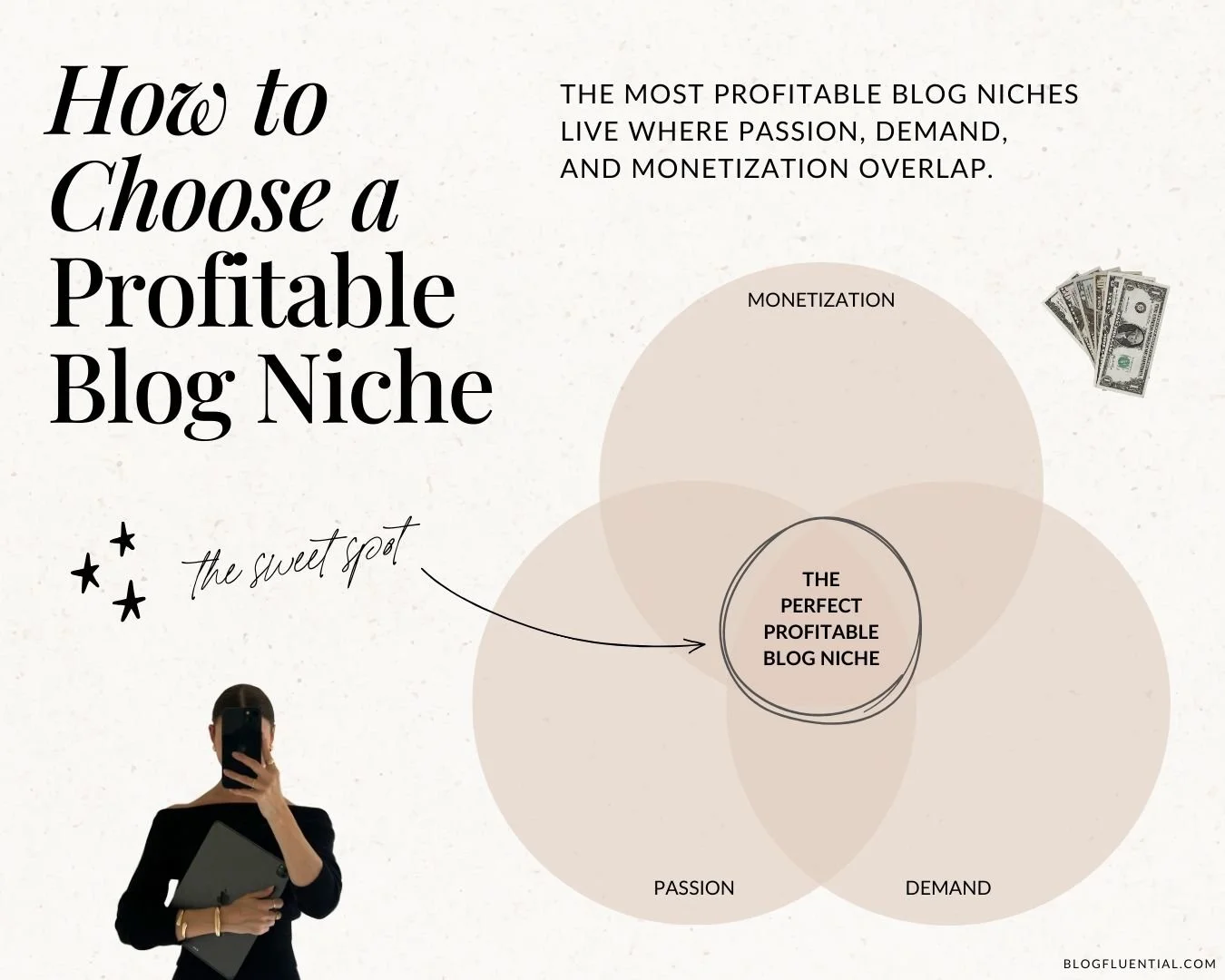
Find the Intersection of Passion, Demand, and Monetization
The best profitable blog niches thrive when these three things overlap:
Topics you enjoy
Topics people are searching for
Topics that can realistically generate income
Starting with something you genuinely enjoy matters because blogging requires consistency. Writing helpful blog posts regularly becomes much easier when you actually care about the subject.
But passion alone isn’t enough.
If no one is searching for that topic, it will be difficult to grow traffic. And if there are very few products or services related to the topic, monetization opportunities may be limited.
A strong blog niche typically has clear demand and multiple income opportunities. These niches work well because readers actively search for information and there are many related products or services bloggers can recommend.
When evaluating niche ideas, ask yourself:
Are people searching for this topic?
Can I consistently create blog posts around it?
Are there opportunities to monetize your blog later?
If the answer is yes, you’re likely on the right track!
Use Keyword Research Tools to Find Best Keywords and Check Search Volume
Once you have a few niche ideas, the next step is validating whether people are actually searching for content related to those topics. This is where keyword research comes in.
Keyword research tools help you see what people type into search engines and some of them even show you how often those searches occur. Those insights help you understand whether your niche has enough demand to attract traffic over time.
Some helpful keyword research tools include:
AnswerThePublic
Ubersuggest
Ahrefs
Keysearch
Google search
Google Trends
Pinterest search
Pinterest Trends
Look for keywords related to your niche and pay attention to the search volume and topic variations that appear. These searches reveal the kinds of topics people are already interested in and can give you insight into how many people are interested in it.
Check Affiliate Programs and Product Demand
If your goal is to make money blogging, it is important to think about monetization opportunities early on (like right now is a good time).
One of the most common ways bloggers earn income is through affiliate marketing. This simply means recommending affiliate products/services and earning a commission when someone purchases through your referral links.
Before committing to a niche, spend a few minutes researching whether there are affiliate programs related to that topic. Many brands offer affiliate partnerships including Amazon, travel booking platforms, fashion retailers, software companies, and online services.
If there are multiple relevant affiliate products and/or services you could recommend, that’s a strong sign the niche has good blogging income potential. You can also consider whether the niche could eventually support other income streams like digital products, courses, templates, memberships, or brand collaborations.
Avoid Overly Broad Blog Niches
Another common mistake beginner bloggers make is choosing a niche that is simply too broad.
For example, topics like “lifestyle” or “wellness” sound appealing because they allow you to write about many things. But broad niches can make it harder for your blog to stand out or attract a clearly defined audience.
Narrowing your focus often leads to faster growth.
Instead of a general lifestyle blog, you might focus on travel guides for solo female travelers, minimalist capsule wardrobes, or natural skincare routines.
A more focused niche helps search engines understand what your blog is about and makes it easier for readers to see your blog as a trusted resource. Over time, you can always expand into related topics. But starting with a clear niche gives your blog the direction it needs to grow.

How Do You Earn Money From Blogging?
One of the best things about blogging is that there isn’t just one way to make money.
Unlike many traditional businesses that rely on a single revenue stream, bloggers often earn blogging income through several strategies at the same time. As your audience grows and your blog starts attracting consistent traffic, those income streams can stack together to create a sustainable online business.
Some monetization methods work best for high-traffic blogs, while others can generate income even with a smaller but highly engaged audience.
Let’s walk through some of the most common ways bloggers monetize their blog!
Display Ads
Display ads are often the first monetization method bloggers try.
This strategy allows you to place advertisements on your website and earn income when visitors view or interact with those ads. The more traffic your blog receives, the more ad impressions you generate, and the more ad income you earn.
Many bloggers start with beginner-friendly networks like Google AdSense because they have very few traffic requirements and are easy to set up.
As traffic grows, bloggers often upgrade to mid-tier ad networks such as Journey by Mediavine which offer better earnings and more optimized ad placements.
Once a blog reaches higher traffic levels, creators can apply to premium ad networks like Ezoic, which are known for generating significantly higher ad revenue.
Display ads work best for blogs that receive steady traffic, which is why strong SEO strategies play such an important role in long-term income.
Affiliate Marketing
Affiliate marketing is one of the most popular and profitable ways to monetize your blog.
It works like this: you recommend a product or service to your audience and earn a small commission when someone makes a purchase through your referral link.
Affiliate marketing works especially well when recommendations are naturally integrated into your blog’s content.
For example:
A travel blogger might recommend hotels, luggage, or booking platforms.
A fashion blogger might link to outfits or accessories featured in their blog posts.
A food blogger might recommend kitchen tools used in recipes.
The key is authenticity. Readers trust recommendations that feel helpful and genuine—not overly promotional.
Some great affiliate programs for bloggers include:
Amazon Associates (perfect for bloggers who always shop Amazon)
LTK (formerly RewardStyle)
ShopMy (a great LTK alternative)
TravelPayouts (perfect for travel bloggers)
Every affiliate program is different, so commission rates can vary. And if a customer ends up returning their purchase, the commission you earned is usually reversed. That said, affiliate marketing is still one of the easiest ways to start making money from your blog by recommending products or tools you already use and trust.
Digital Products
Digital products are one of the most scalable ways to make money blogging.
Instead of promoting a brand’s products or services to maybe earn a commission, you can create something once, keep 100% of the profit, and sell it repeatedly to your audience.
Examples of digital product ideas for bloggers include:
ebooks
templates
guides
courses
presets
downloadable resources
Digital products work best when they solve a specific problem for your audience.
For example:
A travel blogger might sell travel itineraries.
A fashion blogger might create a capsule wardrobe guide.
And because digital products are delivered online, there are no inventory costs or shipping logistics involved. Over time, digital products often become one of the most profitable income streams for bloggers.
Sponsored Posts
Sponsored posts involve collaborating with brands to create blog posts featuring their products or services.
In exchange, the brand pays the blogger to publish the content on their site or promote it to their audience.
These partnerships are especially common in niches like:
travel
fashion
beauty
lifestyle
technology
As your blog grows and your audience becomes more engaged, brands may begin reaching out directly with collaboration opportunities.
Sponsored posts can be very lucrative, but it’s important to maintain transparency and only partner with brands that genuinely align with your audience.
Coaching or Services
Some bloggers monetize their expertise by offering coaching or services related to their niche.
For example:
A blogging educator might offer website audits or consulting.
A fitness blogger might provide personal coaching.
A travel blogger might offer trip planning services.
Service-based income can be especially helpful early on because it doesn’t require massive traffic to generate revenue.
The cool thing is, even a smaller audience can turn into paying clients if your blog clearly demonstrates your expertise!
Membership Sites
Membership sites allow bloggers to generate recurring blogging income by offering exclusive content or resources to paying members.
Instead of selling a one-time product, members pay a monthly or annual fee to access premium material such as:
tutorials
templates
community groups
exclusive content
While building a successful membership takes time, it can eventually become one of the most stable and predictable income streams within a blogging business.
How Much Can You Earn From Blogging?
Blogging income can vary a lot, but the earning potential is often much higher than beginners expect.
Some bloggers earn a few hundred dollars per month as a side income, while others grow their blogs into full-time businesses generating thousands of dollars each month. How much you earn typically depends on several factors, including your niche, your traffic, and how effectively you monetize your blog.
Affiliate income, for example, often depends heavily on buyer intent. Blogs that focus on topics where readers are actively researching solutions or products tend to generate more affiliate revenue.
Display ads, on the other hand, rely more heavily on traffic volume. The more visitors your blog attracts, the more ad impressions you generate.
For bloggers aiming to build a full-time income, success usually comes from combining multiple monetization strategies.
Many profitable blogs earn income through a mix of:
affiliate marketing
display ads
digital products
sponsored content
services
With consistent content, growing traffic, and the right strategy, blogging can evolve from a creative outlet into a scalable online business.

How To Start A Blog And Make Money (Step-by-Step)
Now that you understand how blogging works and how bloggers earn income, let’s walk through the actual steps to start a blog that makes money.
Step 1: Setup Your Blog
Before you can publish blog posts, you’ll need to set up your blog’s website first. This includes choosing a domain name, selecting a blogging platform, and designing your site so it’s ready for readers.
The good news? Most blogging platforms today have made this process incredibly beginner-friendly.
Choose a Domain Name
Your domain name is the web address people will use to find your blog (for example: yourblogname.com).
Ideally, your domain name should be: short, easy to remember, and relevant to your niche or brand.
Many bloggers choose names that reflect their niche, their personal brand, or a creative concept related to their content.
If possible, try to secure a .com domain, since it’s still the most widely recognized extension.
Quick pro blogging tip: before you fall in love with a name, check that it’s also available on social media platforms. Having consistent branding across platforms can make building your blog much easier later.
Choose a Blogging Platform
Next, you’ll need to choose the platform that will host and power your blog. There are several popular options available, and each works best for slightly different types of bloggers.
Squarespace is one of the most beginner-friendly platforms available. It’s an all-in-one website builder that includes hosting, security, and design tools in one place—no coding required.
Squarespace is especially popular among lifestyle, travel, and fashion bloggers because of its modern layouts and easy drag-and-drop editing. They provide free templates to get you started, or you can choose to purchase a pre-designed Squarespace website from a Squarespace template shop.
Pricing for Squarespace is subscription-based (discounted rates offered for annual payment plans) and includes hosting with their plans.
Setting Up Your Blog on Squarespace: If you decide to create a blog with Squarespace, the process is super simple. Start by choosing a website template. Once you’ve selected a Squarespace template, you can customize it by adjusting colors, fonts, images, and page layouts to match your brand style. After your site design is ready, you’ll purchase a Squarespace plan, connect your domain name, then publish it to go live.
WordPress is the most widely used free blogging platform in the world and offers the highest level of customization. However, it does require purchasing hosting, more technical setup, and knowledge of code.
With WordPress, you typically purchase hosting through providers like SiteGround or Bluehost, install WordPress, and then choose a free theme or purchase a theme to control your design. Hosting pricing varies depending on the hosting provider, storage, and the amount of traffic your site receives.
While WordPress is powerful, it definitely comes with a steeper learning curve.
Setting Up Your Blog on WordPress: Building your blog on WordPress requires a few different steps. First, you’ll purchase a hosting plan through a hosting provider. After purchasing hosting, you’ll install WordPress through your hosting dashboard. From there, you can choose a lightweight theme to control the design of your blog and install essential plugins for functionality such as SEO, security, and site performance. After you’ve finished designing your WordPress site, log into your hosting dashboard, then follow your host’s directions for publishing your site to go live.
ShowIt is another popular platform, especially among creative entrepreneurs who want full creative control over their website design without code.
Known for its drag-and-drop design flexibility (imagine if Canva and Adobe Illustrator had a baby), ShowIt integrates with WordPress for blogging functionality, while allowing you to design your website visually from scratch, or with the purchase of a professionally designed ShowIt template.
ShowIt is subscription based and includes hosting, however pricing varies based on storage and monthly blog visits.
Setting Up Your Blog on ShowIt: To start a blog on ShowIt, you’ll first create a ShowIt account and select a pre-designed template or design your site from scratch. Because ShowIt uses WordPress for blogging functionality, you’ll connect your ShowIt site to a WordPress blog behind the scenes. Once your design is complete, just purchase a ShowIt plan and launch to go live.
All of these platforms are great for SEO and can be fully monetized to support a successful blog, so the best choice ultimately depends on your technical comfort level, design preferences, and budget (both short and long-term).
Step 2: Build Your Blog’s Foundation
Once your website is set up, the next step is building a strong blog foundation that will actually help it attract readers and grow over time.
Unfortunately this is the part where many beginners fail.
They get excited about finally launching their website and immediately start publishing random blog posts without a clear strategy. But the blogs that grow the fastest start with a plan.
Instead of guessing what to write about, successful bloggers focus on creating intentional blog content from the start. Let’s break down what that looks like!
Define Your Audience Avatar
Before you start writing blog posts, it’s important to understand who you’re actually writing for. Your audience avatar is essentially a clear picture of your ideal reader—the person who will benefit most from your blog.
Think about things like:
their interests
their struggles/challenges
their goals
the questions they might search for online
Are they beginners looking for guidance? Are they searching for product recommendations? Are they trying to solve a specific problem? Are they looking for step-by-step tutorials?
When you understand your audience, creating blog content becomes much easier. Instead of writing broad or random blog posts, you can focus on relevant topics that genuinely help solve their problems or answer questions your audience is already asking.
And that’s exactly the kind of content people read, save, and share.
Create 10 to 20 Pillar Articles
One of the best ways to launch your blog with momentum is by starting with a small library of pillar articles.
Many successful bloggers begin by planning 10 to 20 posts focused on the main topics their blog will cover. This helps Google quickly understand what your blog is about and connect your content with the right searches.
Think of pillar articles as the foundation of your blog content. These are helpful, in-depth posts that cover important topics within your niche.
For example, a travel blogger might create pillar articles like:
How to Plan a Weekend Trip
Best Travel Essentials for Long Flights
The Ultimate Packing List for Europe
A fashion blogger might write posts such as:
How to Build a Capsule Wardrobe
Neutral Outfit Ideas for Fall
Wardrobe Basics Every Woman Needs
Starting with a group of focused pillar articles gives your blog direction from the beginning and makes it easier to build additional blog posts around those topics as your site grows.
Perform Keyword Research
Once you’ve brainstormed your pillar article ideas, the next step is making sure people are actually searching for those topics.
This is where keyword research becomes incredibly helpful.
Instead of guessing what your audience might want to read, keyword research allows you to validate whether your pillar topics have real search demand. If people are already typing those topics into search engines, that’s a strong signal that your content has the potential to attract traffic.
For example, if one of your pillar ideas is capsule wardrobes, you might use the keyword research tools mentioned earlier to see what related phrases people are searching for.
You might discover searches like:
capsule wardrobe checklist
neutral capsule wardrobe
capsule wardrobe outfits
minimalist capsule wardrobe
These insights help confirm that your pillar topic has real demand while also revealing additional blog post ideas you can create around it.
When your pillar articles are built around validated search topics, you dramatically increase your chances of attracting traffic from search engines over time.
If you remember one thing from these last few sections, let it be this: focus on solving problems your audience is already searching for!
Optimize On-Page SEO
Once you’ve chosen a keyword for your article, the next step is optimizing the page so search engines understand what your content is about.
On-page SEO (search engine optimization) includes elements like:
your blog post title
headings
URL slug
meta description
image alt tags
But here’s the important part: SEO isn’t about stuffing your blog posts with as many keywords as possible.
It’s about creating clear, helpful content that naturally includes the phrases people are searching for—this helps to improve readability for readers and Google.
When done correctly, well-optimized posts can continue bringing traffic to your blog long after they’re published.
Taking the time to define your audience, plan valuable content, and optimize your posts for search engines can make a huge difference in how quickly your blog traffic grows and how quickly you can start making money blogging.
Step 3: How to Get Traffic to Your Blog
Once your blog’s foundation and SEO is in place, the next big question is:
How do people actually find your blog?
Many beginner bloggers publish great content, but they struggle to grow because they don’t have a clear traffic strategy.
The two most powerful traffic sources for bloggers are Google and Pinterest.Both platforms allow your content to be discovered long after it’s published, which makes them incredibly valuable for consistent, long-term blog growth.
Focus on SEO First
SEO (search engine optimization) is one of the most reliable ways to grow long-term blog traffic.
When your content is optimized properly, your blog posts can appear in Google search results when people are actively looking for information related to your niche.
That means your blog will be there for you to continue attracting readers for months—or even years—after a post is published (peep that clever Friends reference).
SEO does take time to build momentum, which is why it’s important to start early. But once it begins working, it can become one of the most consistent and passive traffic sources for your blog.
For WordPress blogging, the Yoast SEO plugin is the most popular way to help optimize Wordpress blogs.
For blogging with Squarespace, tools like SEOSpace (the Yoast of Squarespace) easily simplify the SEO process for Squarespace blogs.
Target Low Competition Keywords
Here’s a little insider secret: You don’t need to use keywords with massive search volume in order to get your blog posts to succeed.
One of the smartest strategies for new blogs is focusing on low competition keywords.
These are search phrases that still have demand but aren’t dominated by huge websites, which means your blog has a much better chance of appearing in search results while it’s still growing.
So, how do you find out what keywords are low competition vs high competition? There are a few simple ways to find them:
Use keyword research tools like Ahrefs, SEMrush, Ubersuggest, or Keysearch that show keyword difficulty scores. This helps you see whether a topic might be easier or harder to rank for. Most tools use a 0–100 difficulty scale, so 0–20 = Easy (best for new blogs), 21–40 = Moderate competition, 41–60 = Difficult, and 60+ = Very difficult
Look directly at the Google search results. If the first page is filled with large media sites or highly authoritative websites, the keyword may be difficult to compete for. But if you see smaller blogs ranking on the first page, it’s often a sign the keyword may be more achievable.
Use Pinterest search for keyword ideas. When you type a topic into the Pinterest search bar, it will suggest related phrases people are actively searching for. Many of these suggestions are longer, more specific keywords, which often have lower competition and can make great blog post ideas.
Squarespace tip: If you’re using Squarespace for your blog, SEOSpace has a keyword explorer tool that shows difficulty scores!
Build an Internal Linking Structure
Internal linking simply means linking between your own blog posts. Think of it like a web that connects your blog content together, helping readers easily move from one helpful post to the next.
For example, if you write a post called “How to Build a Capsule Wardrobe,” you might link to related articles like “5 Summer Capsule Wardrobe Essentials” or “Summer Capsule Wardrobe Outfit Ideas to Copy.” Those posts can also link back to the main guide, creating a connected web of related blog content.
When you connect relevant articles together through internal linking, it helps readers discover more of your content and encourages them to spend more time on your site (more time spent = more ad revenue and higher likelihood that affiliate links will be clicked). It also helps search engines understand how your blog content is organized.
Over time, a strong internal linking structure can strengthen your blog’s overall authority and help multiple posts rank in search engine results.
Capture Emails From Day One
While Google and Pinterest can bring readers to your blog, email allows you to build a direct relationship with your audience.
By collecting email subscribers from the beginning, you create a way to stay connected with readers even if traffic sources or social media algorithms change.
Many bloggers offer a small free resource in exchange for an email address, such as:
a checklist
a guide
a template
a mini course
Over time, your email list can become one of your most valuable assets where you can share affiliate links, promote products, and even collaborate with brands on sponsored email campaigns.
Use Pinterest to Accelerate Blog Traffic
While SEO is a powerful long-term strategy, Pinterest can often drive traffic much faster and depending on your strategies, last almost just as long.
Unlike traditional social media platforms, Pinterest is a visual search engine where users actively search for ideas and inspiration.
When your blog posts are turned into visually appealing pins, they can appear in Pinterest search results and continue circulating on the platform for months or even years.
Many bloggers use Pinterest to generate early traffic while their SEO strategy gains momentum.
Because both Pinterest and SEO rely on search-based discovery, they work incredibly well together to create steady, long-term traffic for your blog.
Since learning how to use Pinterest to drive traffic to your blog can take some time to figure out on your own, we highly recommend the Profitable Pin Formula Pinterest course and PinClicks Pinterest tool—these have been the most effective resources for confidently and quickly growing our Pinterest traffic.
Step 4: How to Monetize Your Blog
Once your blog begins attracting consistent traffic, the next step is turning that traffic into blogging income!
The good news is that monetizing a blog doesn’t have to be complicated.
Many successful bloggers start with a few simple strategies and expand as their audience grows.
Add Affiliate Links Contextually
One of the easiest ways to start making money blogging is through affiliate marketing.
The most effective affiliate links appear naturally within your blog posts rather than feeling forced.
For example:
A travel blogger writing about travel essentials might link to luggage, packing cubes, or travel gear.
A fashion blogger might link to outfits or clothing items featured in their blog posts.
A food blogger might link to kitchen tools used in recipes.
When affiliate recommendations feel helpful and relevant to the topic of the post, readers are much more likely to trust them, which often leads to better conversion rates (meaning the percentage of readers who actually click and make a purchase).
Apply for Ad Networks After You Reach Traffic Thresholds
Display ads can become a reliable passive income stream once your blog begins receiving consistent traffic.
However, most premium ad networks require a minimum number of monthly page views before you can apply.
Mid-tier ad networks like Journey by Mediavine or Monumetric, only require about 10k sessions per month so they’re a great place to start if you meet the requirements.
Once traffic grows even higher, bloggers often upgrade to larger ad networks such as Raptive (requires 25k pageviews per month), Mediavine (requires 50k sessions per month), or Ezoic (requires 250k monthly visits) which typically generate higher ad revenue.
Because ad income is tied to how much traffic your site receives, this monetization method becomes even more powerful as your blog grows, but it’s important to keep in mind that it also requires consistent traffic in order to be eligible.
Create a Simple Digital Product
Another powerful way to monetize your blog is by creating your own digital product.
Unlike affiliate marketing or ads, digital products allow you to earn income directly from your audience.
Your first product doesn’t need to be complicated. Many bloggers start with simple resources such as:
guides
templates
checklists
presets
mini courses
For example, a travel blogger might sell a packing guide, while a fashion blogger might create a capsule wardrobe guide.
As your audience grows and you learn more about their needs, digital products can evolve into one of the most scalable passive income streams within your blogging business.
Final Thoughts on Starting a Blog That Makes Money
Starting a blog that makes money isn’t about luck or going viral overnight.
It’s about building something intentionally.
Choosing a niche you care about. Creating helpful blog content. And showing up consistently with a strategy behind what you publish.
The truth is, most profitable blogs don’t explode overnight. They grow over time as more blog posts get discovered.
Every post you publish becomes another doorway for someone to find your content.
And with the right foundation, your blog can grow into something much bigger than a website. It can become a platform that shares your ideas, connects you with an audience, and eventually turns into a profitable digital asset.
And the best part? Every successful blog once started exactly where you are now.
Ready to Start Your Blog?
Starting a blog is exciting, but let’s be honest—it can also feel a little overwhelming.
There’s a lot to figure out in the beginning. Choosing your niche. Planning your content. Designing your website. And then actually launching the thing.
It’s a lot.
And the truth is, it shouldn’t have to be that complicated.
That’s exactly why Blogfluential exists.
Our Squarespace templates for bloggers are designed to help you skip the complicated design process so you can focus on what actually matters: creating content and launching your blog.
Each template also includes a free 5-day launch course that walks you through the early stages—from getting clarity on your niche to creating a simple content plan and getting your website live with confidence.
Join the waitlist below to be the first to know when the templates and launch course officially drop, or head to the shop to get a sneak peek at the live template demos.